
Driving the Future of Undersea Domain Awareness for the U.S. Navy Through Partnership and Innovation
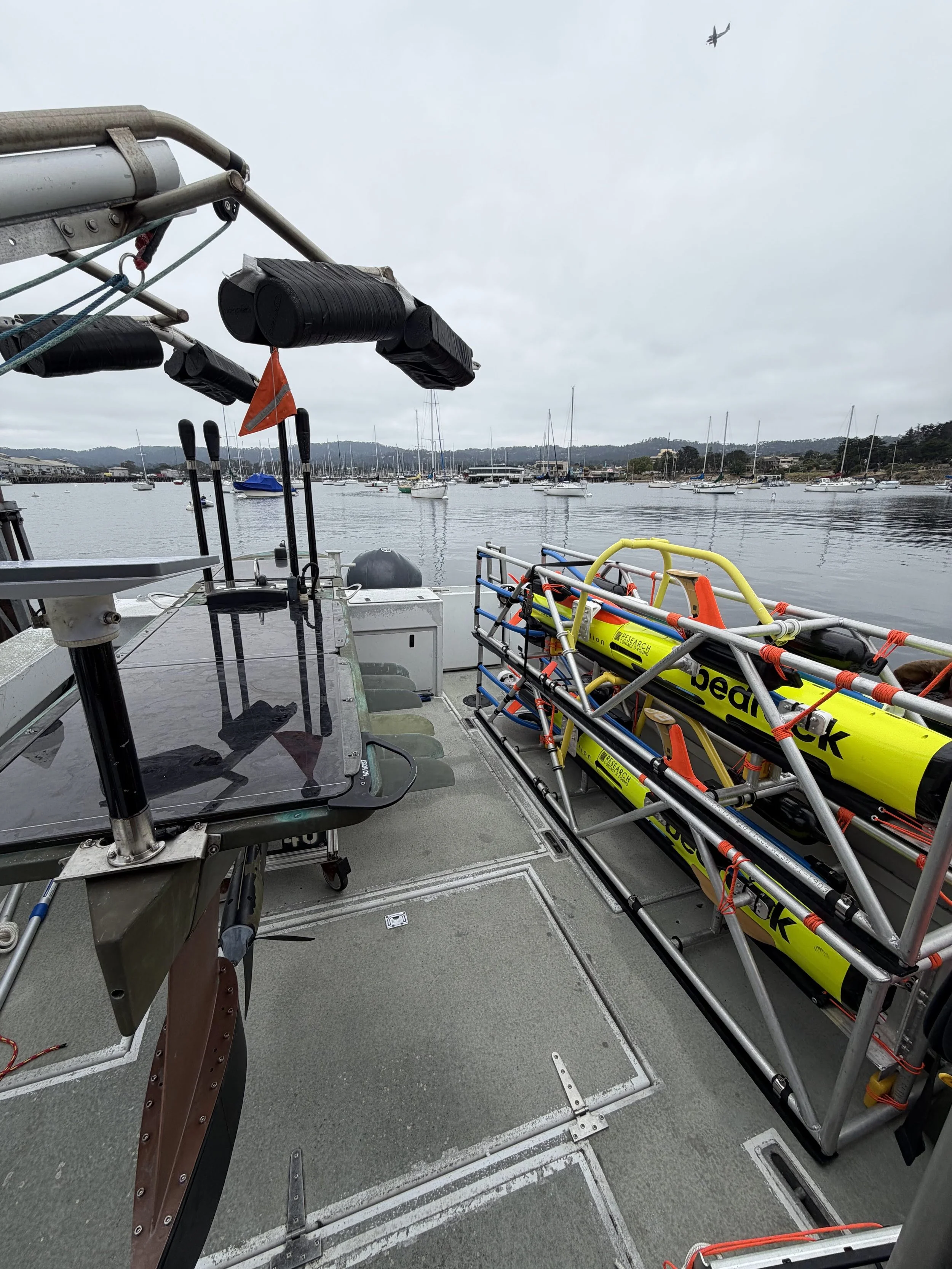
At Bedrock, we believe that delivering end-to-end undersea domain awareness shouldn't require rebuilding the stack or relying on fragmented feeds. Recently, we put this philosophy to the test by participating in Exercise LANTERNFISH 2026, the U.S. Navy's first dedicated, government-led undersea domain demonstration event at the Joint Expeditionary Base (JEB) in Virginia. Alongside Navy operators, program officers, and AUKUS partners, Bedrock AUVs operated as DIGIT-enabled nodes within the exercise construct.
Here is a look at the technical achievements we demonstrated for the U.S Navy at LANTERNFISH 26, and why they matter for the future of ocean intelligence:
Seamless Interoperability and C2 Integration
The Achievement: Bedrock deployed Integer Technologies’ DIGIT message protocol directly onto our AUV platforms. This seamlessly bridged two companies’ software stacks for live acoustic data relay. Through a three-way interoperability demo, Bedrock AUVs ran Integer’s software to communicate acoustic position data to a Liquid Robotics Wave Glider®. The Wave Glider then forwarded the data in real-time to the US Navy’s Team Awareness Kit (TAK) global asset tracking view.
Why It Matters: Sailors don't want another screen; they want capability that flows into the Common Operating Picture they already operate. By leveraging MOSA and UMAA-compliant open architecture, we integrated into existing Navy C2 systems with zero new infrastructure.
Real-Time Insights via Mosaic
The Achievement: Bedrock piped real-time data across the country from the remote operations site in Monterey Bay to JEB in Little Creek, VA through USN systems across multiple platforms. We also processed survey data products, including MBES and SBP data, and made them directly available via Bedrock’s Mosaic platform.
Why It Matters: Bedrock successfully demonstrated our full interoperability with existing Navy program-of-record systems and proved that we can deliver high-quality, real-time data to Navy decision-makers without requiring them to be on-site.
Adaptive Operations in Real-World Conditions
The Achievement: When operators detected a thermocline degrading acoustic communications mid-mission, they dynamically retasked a Bedrock AUV to swim above the thermocline for improved comms — fully remote from the other side of the country.
Why It Matters: It demonstrates Bedrock’s real-time, adaptive autonomous mission management capabilities.
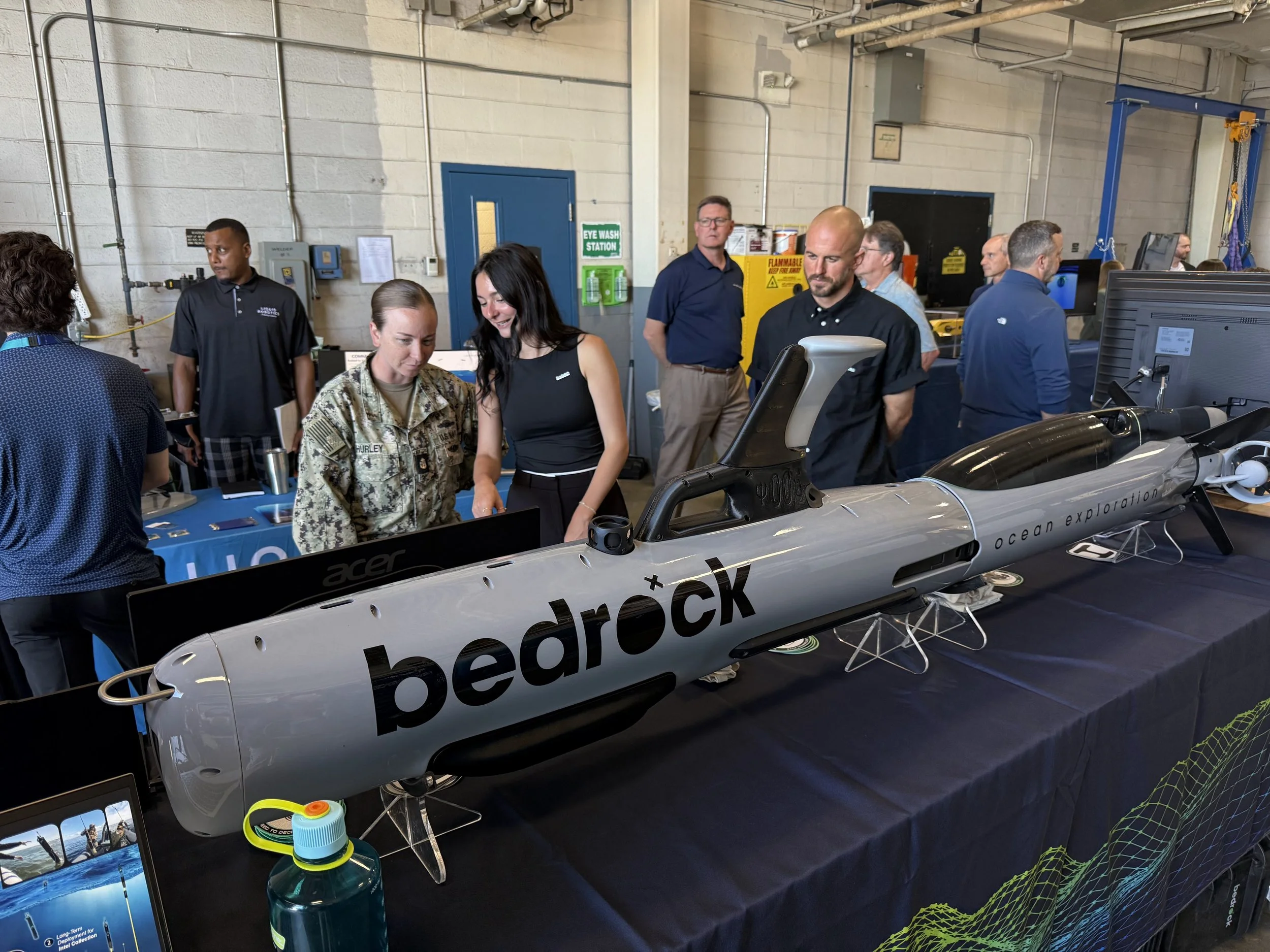
The Critical Achievement: Working as One
If there's a single throughline connecting every milestone above, it isn't any one sensor, vehicle, or software release, it's the way they fit together. With Bedrock’s flexible integration capabilities, we were able to integrate new technologies like DIGIT, and seamlessly hand off data to a Liquid Robotics Wave Glider, proving the full-stack, multi-system interoperability required for scale.
And that is the whole point.
Seamless system integration is more than an engineering ideal. It's a working model for how organizations succeed together, and the bedrock of true ocean intelligence. A message protocol that lets two companies' software speak as one is the technical expression of a much larger truth. The hardest problems in the undersea domain won't be solved by anyone operating alone. They'll be solved by partners who build to open standards, trust one another's components, and let capability flow across organizational boundaries.
Interoperability between systems and collaboration between people are the same discipline, practiced at different layers. We're grateful to the partners who made this possible.
Above all, we commend the U.S. Navy: the operators, program officers, and Distinguished Visitors who convened the service's first dedicated, government-led undersea domain demonstration and set the conditions for real interoperability rather than isolated capability.
That approach is what will allow the ocean economy to flourish. The seas are too vast, and the demands on them, from security to scientific understanding and commerce, are too great for closed systems. Collaboration accelerates innovation, and lets a diverse community of builders contribute to a robust ocean economy.
That is the future of ocean intelligence Bedrock is proud to help build, alongside partners who understand that no one navigates the deep alone.
